The Rose of Leary is a powerful method that helps improve communication skills and self-awareness. This unique approach shows you how to communicate and collaborate more effectively and gain insight into human interactions. Discover the possibilities and begin your journey toward personal growth.
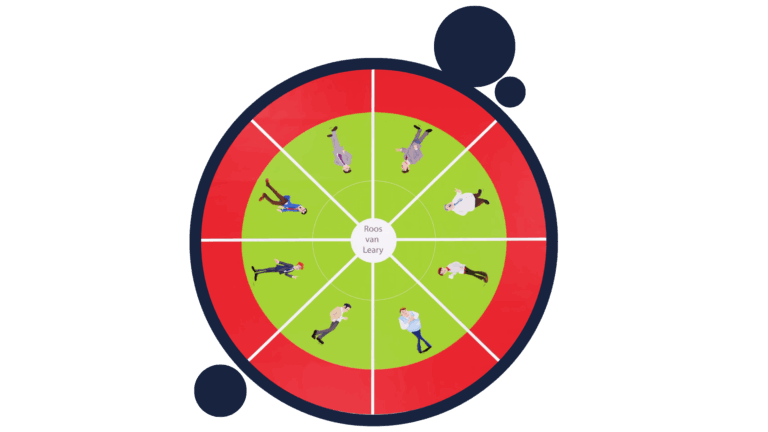
Leary's Rose provides insight into interpersonal behavior—the intent behind behavior and its effect on others. It gives you an overview of the natural patterns (interactions) that people form with one another. Behavior elicits behavior. When I speak, you listen. When I follow, you take the lead.
How you perceive others starts with you! As soon as you notice that a pattern is becoming “restrictive,” Leary’s Rose provides you with a tool (the interaction key) to effectively influence the other person and improve your connection.
On this page, you'll find all the information you need to learn how to apply the 8 behavioral styles so you can effectively influence any situation.
We call this “creating self-aware interactions.”
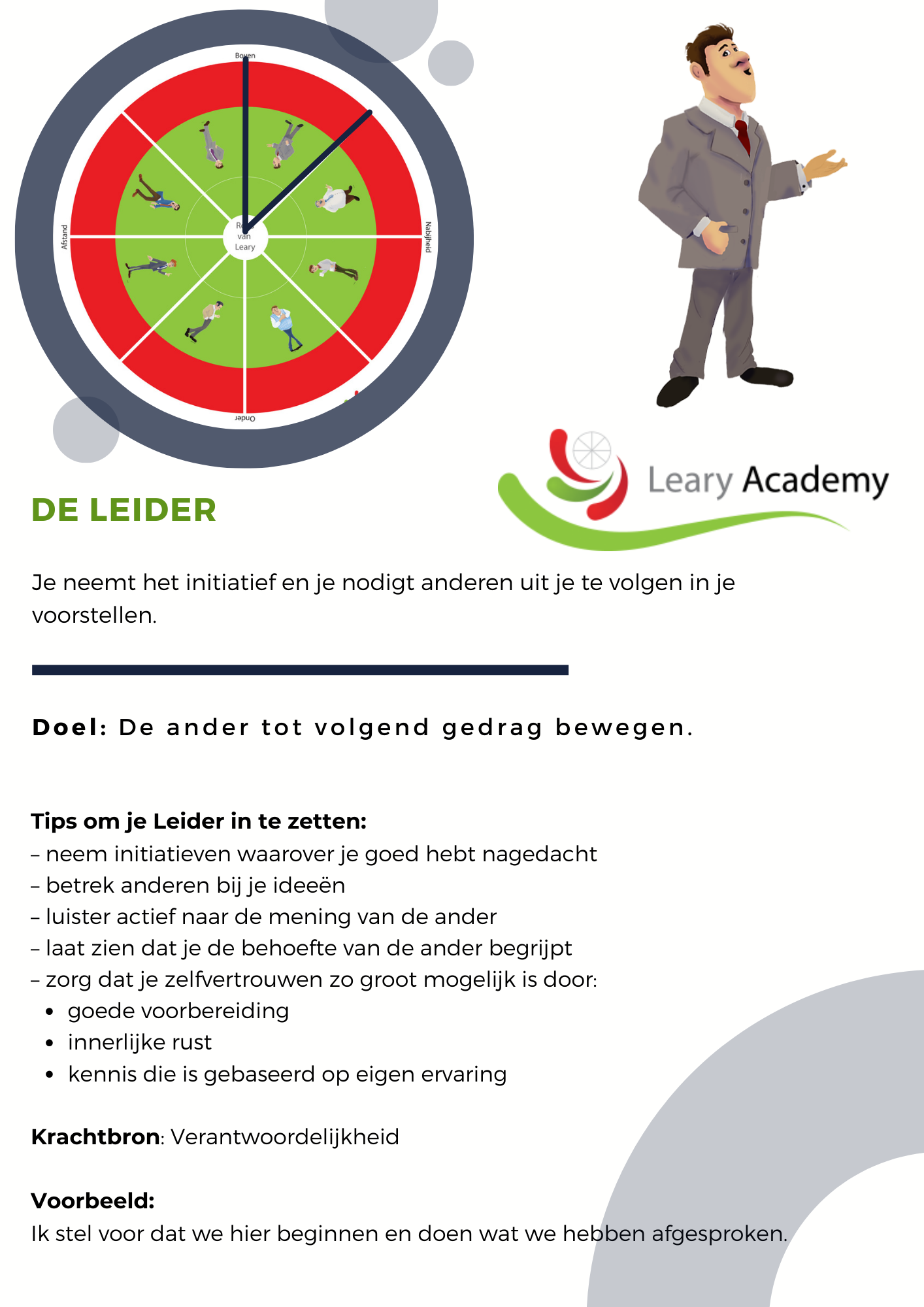
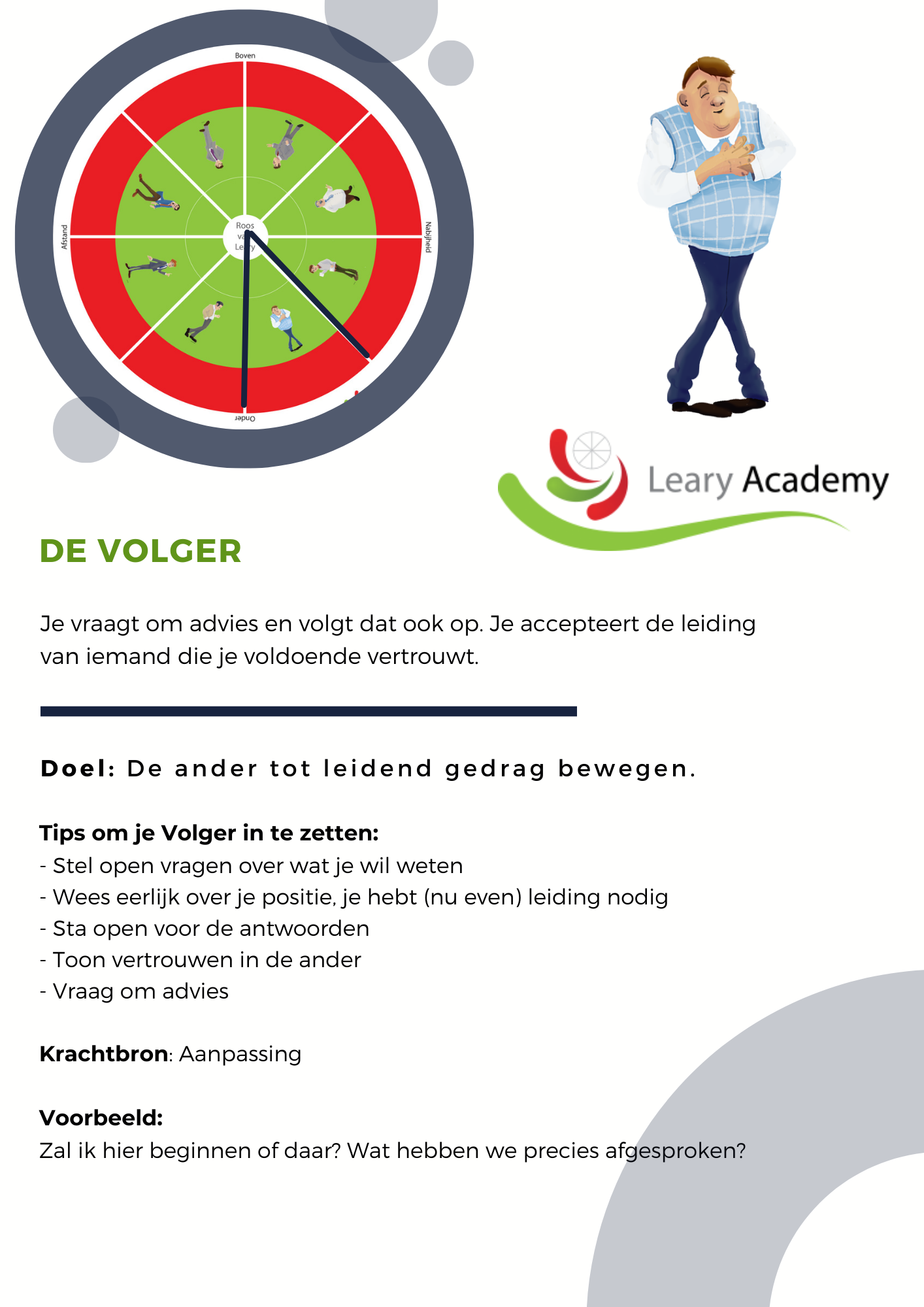
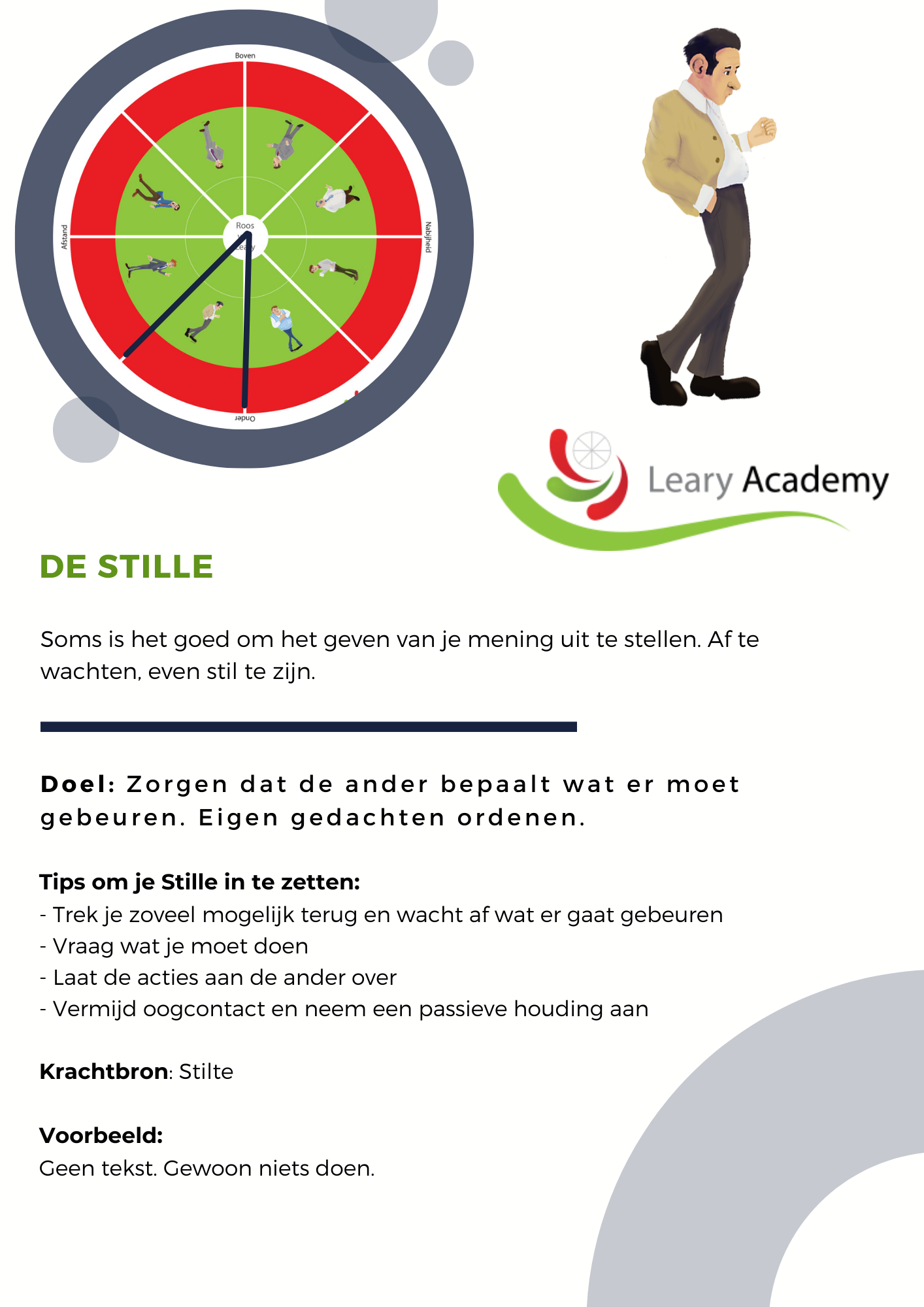
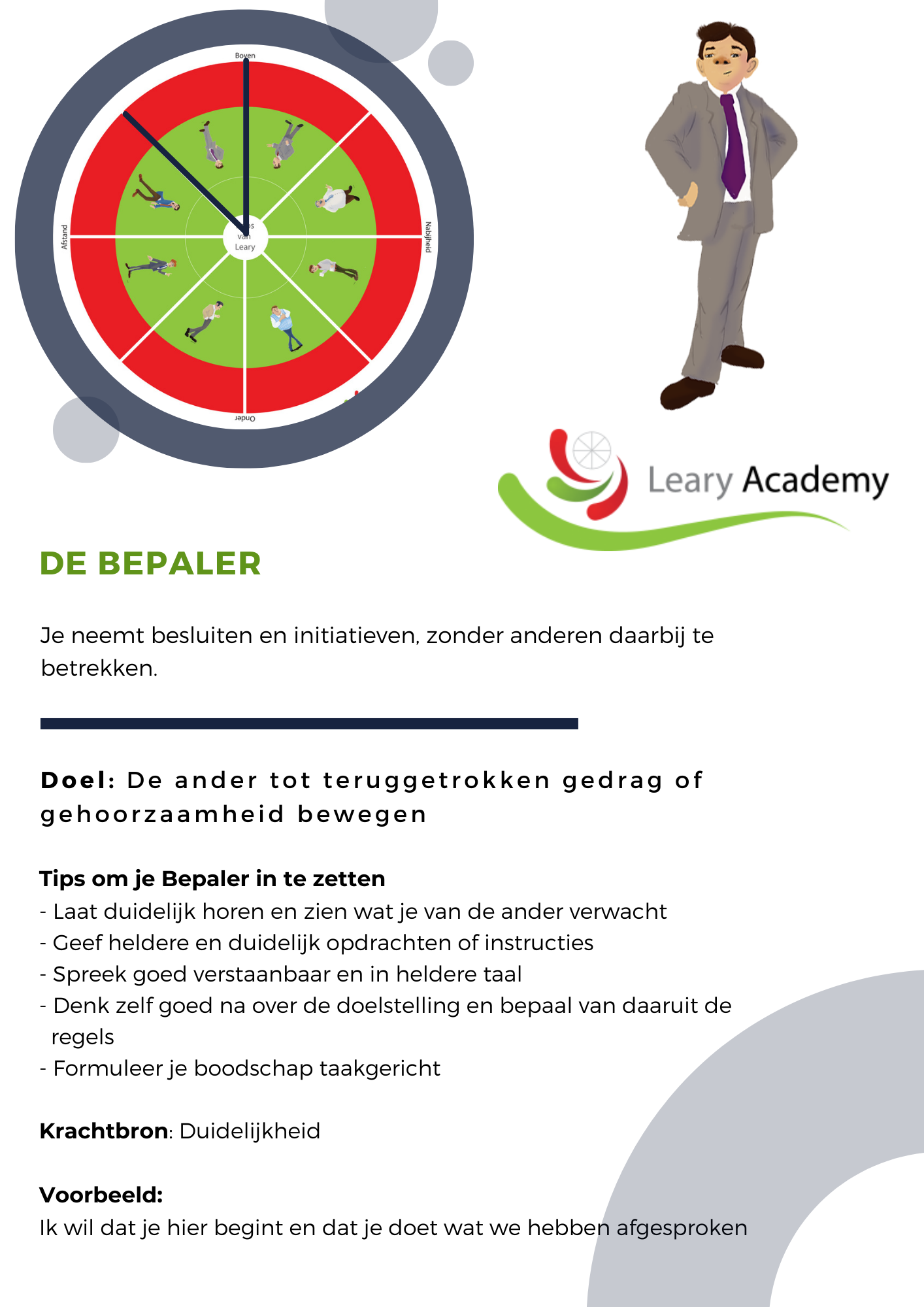
Leary's Rose illustrates how behavior triggers behavior. The model identifies eight behavioral styles that we all possess. Some styles come naturally to us and feel familiar, while others we avoid or find difficult.
Important to remember: Leary's Rose is not about labeling. The model states does not: “You’re dominant” or “You’re reserved,” but rather shows how flexible you are in using different styles and how others perceive them.
By becoming aware of these dynamics, you’ll gain insight into how you can influence your interactions and communicate more effectively.
Perhaps the most important principle of Leary's Rose: all behavioral styles have value, depending on the context.
You may have the best intentions, but how your behavior is perceived is determined by the other person. Everyone views interactions through their own lens of norms, values, and experiences.
This means that:
In short: successful interaction doesn't start with what you send, but with how it's received.
A better understanding starts with yourself
Would you like to gain insight into your own “Leary Rose”? Our scientifically grounded and validated Leary Rose test—the Interpersonal Profile—provides insight into behavioral dynamics in a way that’s personal and practical for anyone who wants to increase self-awareness, improve communication, and strengthen collaboration with others. Learn to communicate with greater impact.
Each behavioral style arises from a combination of two dimensions: dominance and affiliation. Together, they form eight distinct “sectors,” each with its own behavioral style and typical characteristics.
Although we often have a preference, you can learn to switch to a different style in any situation. Every style can be valuable and effective.
Eight behavioral styles, each with its own characteristics. Discover which behaviors are associated with each—and which style you prefer to use.

Discover the Rose of Leary as a tool for deepening your understanding to enhance your interpersonal and personal impact, and learn how to effectively influence others’ behavior using three simple questions.
Sign up now for one of our courses and get practical insights and exercises!
Leary's Rose provides insight into interpersonal behavior—the intent behind behavior and its effect on others. It gives you an overview of the natural patterns (interactions) that people form with one another. Behavior elicits behavior. When I speak, you listen. When I follow, you take the lead.
How you perceive others starts with you! As soon as you notice that a pattern is becoming “restrictive,” Leary’s Rose provides you with a tool (the interaction key) to effectively influence the other person and improve your connection.
In ourfree e-book, you'll find all the information you need to learn how to apply the 8 behavioral styles so that you can effectively influence any situation.
Leary's Rose is known as one of the most widely used methods for learning how to influence others effectively and understand behavior. If you’re bothered by someone else’s behavior, you can take a different approach to guide that person in a direction that’s more comfortable for you and acceptable to them. You can learn how to do that at www.roosvanleary.com
Applying Leary’s Rose in practice isn’t always easy. There’s often more to it than what you read in a book about Leary’s Rose. Applying the Leary Rose begins with identifying which “stifling interaction pattern” you’ve fallen into with the other person. Once you’ve clarified that, you’ll apply the interaction key, which allows you to effectively influence your own difficult situation. Would you like to learn how to use this interaction key correctly to achieve the desired effect? During our one-day training course “Influencing Others”, you’ll discover Leary’s Rose as a powerful tool for deepening your interpersonal and personal impact, and you’ll learn how to effectively influence others’ behavior.
Leary's Rose is effective because it provides a clear and visual tool. It helps with self-reflection and increases empathy in communication, which leads to better collaboration and relationships. By better understanding behavior, you can respond more effectively to others and improve your own communication.
While the Leary Rose is often perceived as complex and abstract, combining it with the Leary Rose Test—The Interpersonal Profile—offers clarity, simplicity, and depth all in one. Learn here how the test can help you communicate with greater impact and build strong relationships with others.
The Leary Rose is suitable for anyone who wants to improve their communication skills and collaborate more effectively. Whether you’re a professional, a student, or simply interested in personal development, this method offers valuable insights and tools. Visit www.roosvanleary.com for a comprehensive free e-book.
The name "De Roos van Leary" is based on the founders of the theory: Timothy Leary and the Kaiser Foundation.
Leary's Rose provides insight into interpersonal behavior—the intent behind behavior and its effect on others. It gives you an overview of the natural patterns (interactions) that people form with one another. Behavior elicits behavior. When I speak, you listen. When I follow, you take the lead.
How you perceive others starts with you! As soon as you notice that a pattern is becoming “restrictive,” Leary’s Rose provides you with a tool (the interaction key) to effectively influence the other person and improve your connection.
In our free e-book, you'll find all the information you need to learn how to apply the 8 behavioral styles so you can effectively influence any situation.
We call this “creating self-aware interactions.”
If you understand how you perceive the other person’s behavior, you can “categorize” it within one of the behavioral styles described in Leary’s Rose. This helps you identify theproblematic interaction patternyou’ve fallen into with the other person. By then applying theinteraction key—also known as horizontal intervention or horizontal crossing—you invite the other person to adopt different, “desirable” behavior. For more information, visitwww.roosvanleary.com
You can learn how to perceive others and how to understand their behavior with the help of Leary’s Rose. This is a powerful tool that teaches you why you find certain behaviors difficult and what you can do to work things out together with the other person. Questions such as: What do you experience and what do I wantare essential here. How you perceive the other person is largely influenced by your observation, interpretation, and evaluation of their behavior. These lead to certain thoughts and feelings, which in turn result in an action—your reaction. You can learn how this works with the help of our free e-book at www.roosvanleary.com
Effective influence begins with understanding behavior in others. You can learn how you perceive others and how to gain insight into their behavior with the help of Leary’s Rose. This is a powerful tool that teaches you why you find certain behaviors difficult and what you can do to work things out with the other person. Questions such as: What do you experience and what do I wantare essential here. How you perceive the other person is largely influenced by your observation, interpretation, and evaluation of their behavior. These give rise to certain thoughts and feelings, which in turn lead to an action—your reaction. You can learn how this works with the help of our free e-book at www.roosvanleary.com