Below are a few examples of what can happen within each of the four interaction patterns. (from right to left)
The Helper and the Supporter:
We believe in what we can achieve together.
When I help, I actively contribute to the harmony that exists between us.
I'm trying to get you to admit that you're happy with what I'm offering you.
When I ask for support, I make it very clear to you that I need your help; I make you feel responsible for me.
We are both willing to support and help each other.
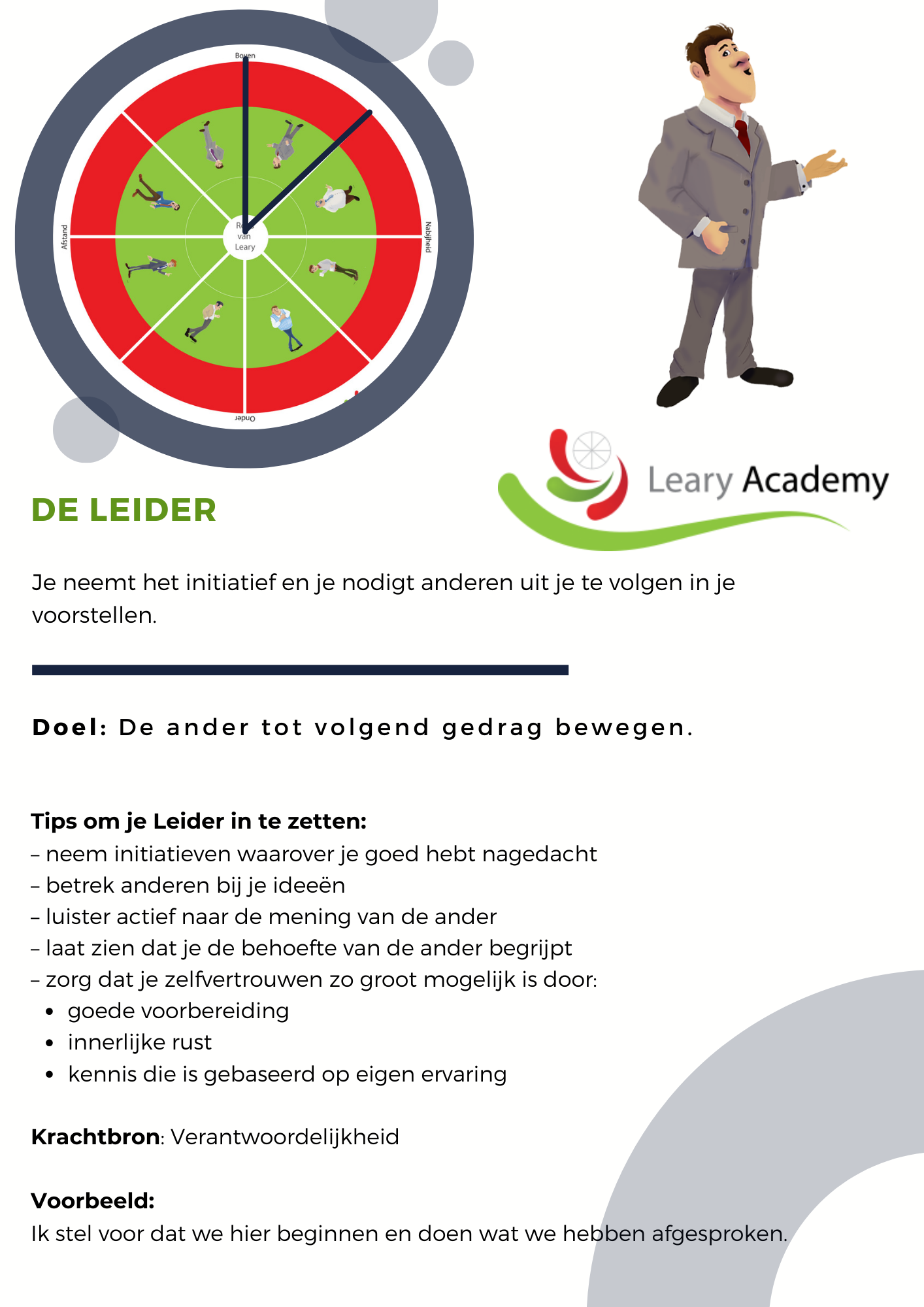
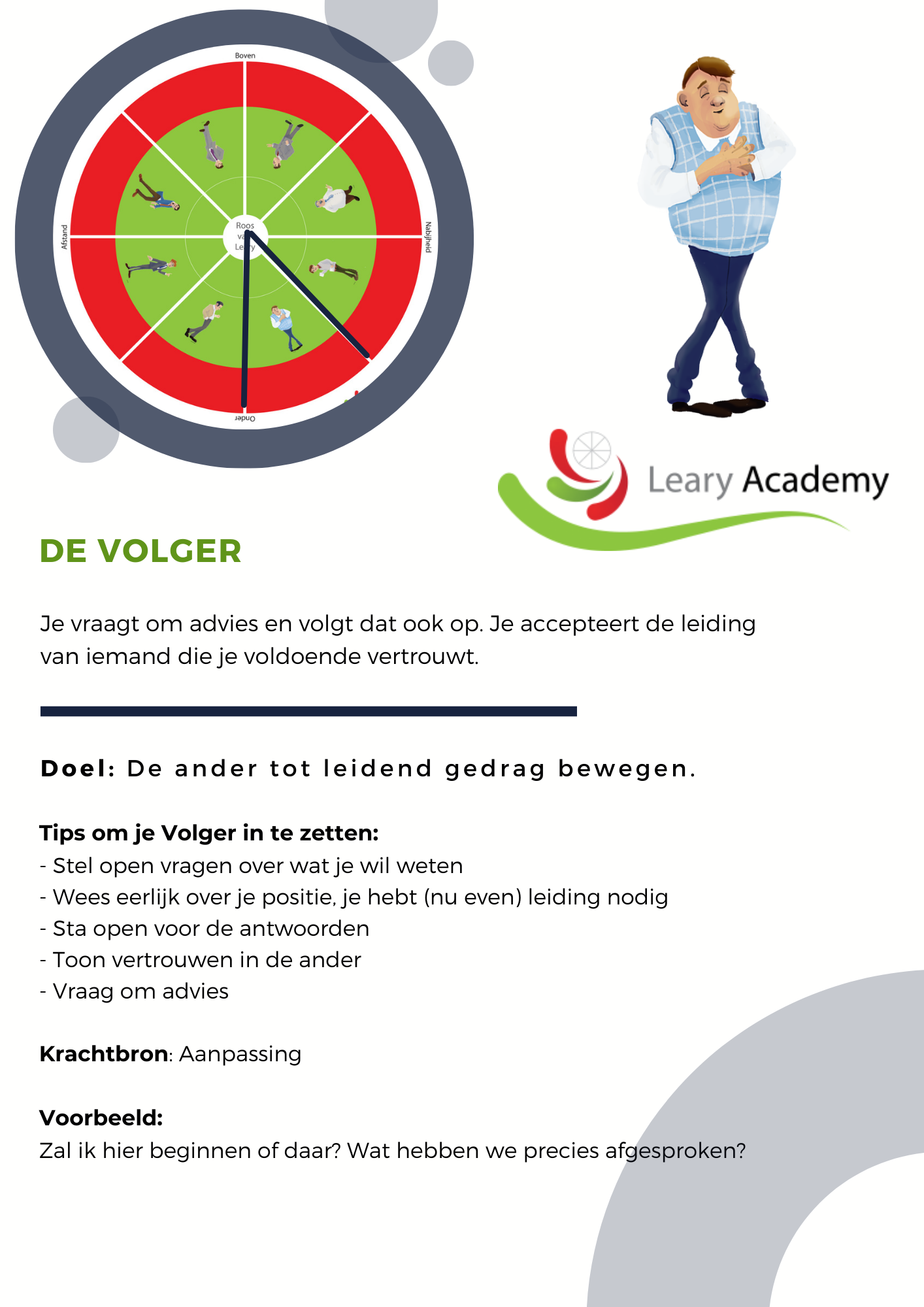
The Leader and the Follower:
Mutual trust
If I take the lead, I'm confident that you'll let me take the initiative; by doing so, I'm encouraging you to agree with what I propose.
If I follow your lead, I'm confident that you're willing and able to take charge; by doing so, I'm encouraging you to make suggestions and take the initiative
There is a significant difference in the level of knowledge and/or skills we possess that enables us to take on responsibility and/or makes us willing to do so.
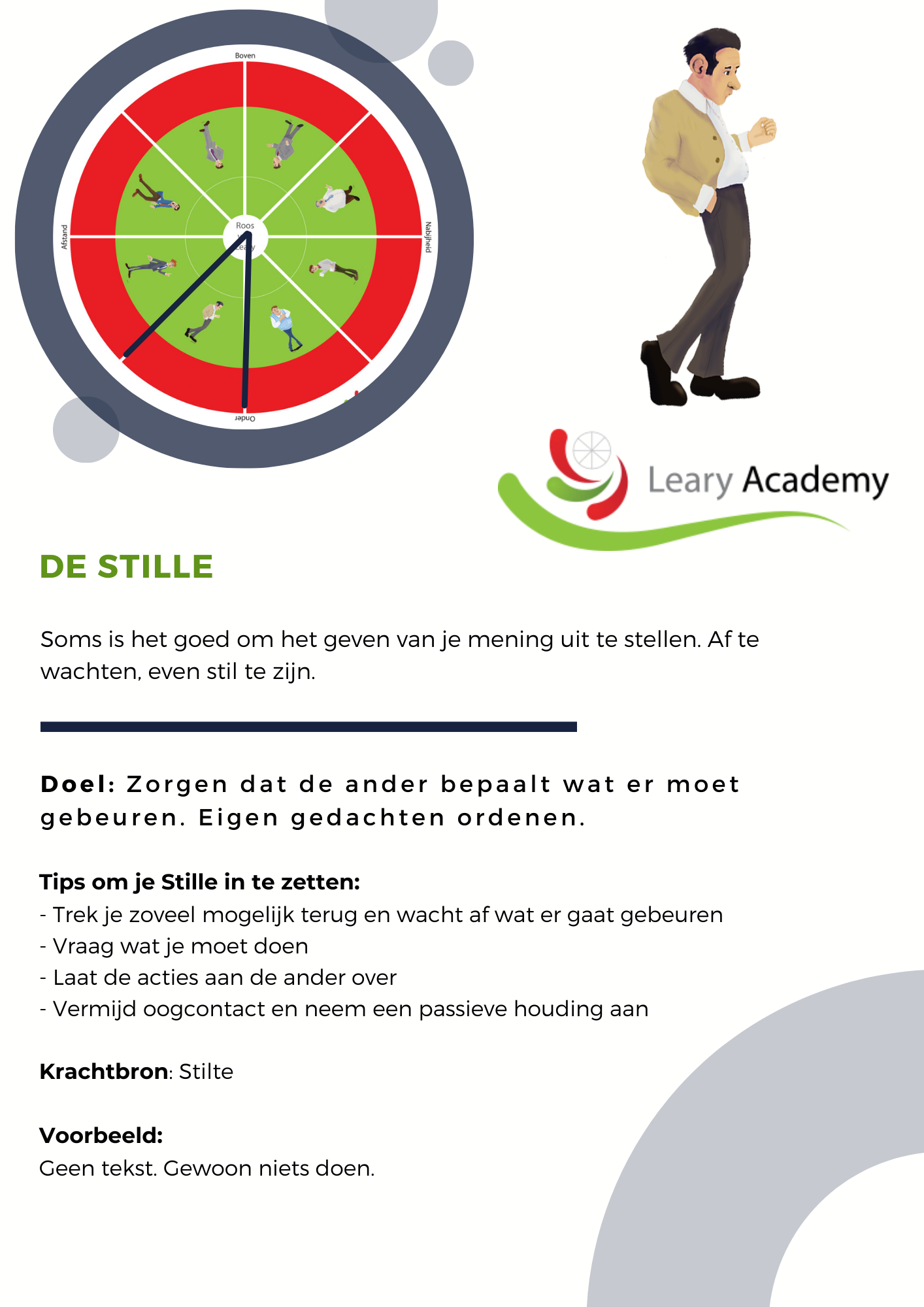
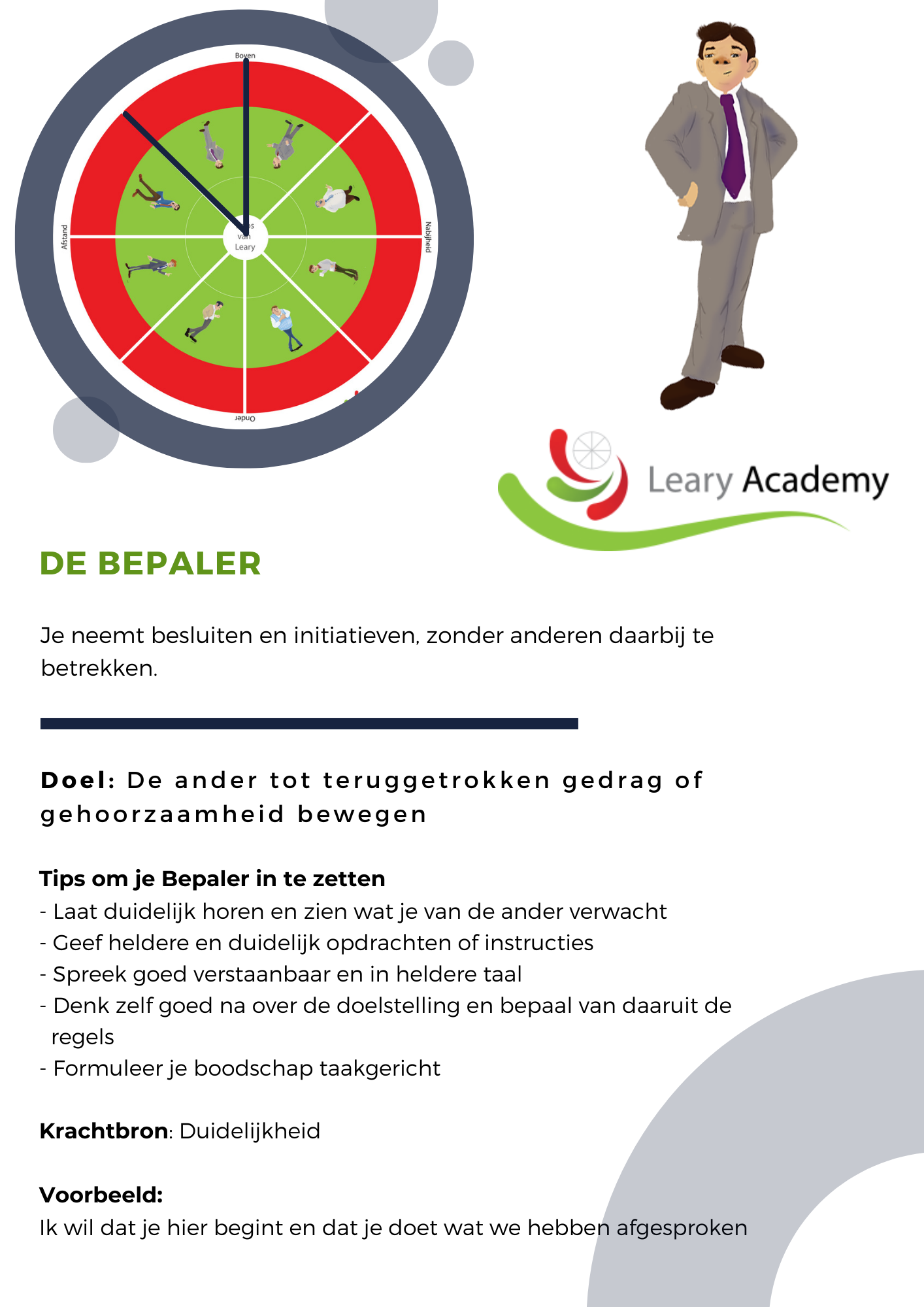
The Decider and the Silent One:
There is a lack of mutual trust
When I use the determiner, it's because I can't assume that you'll do what I want you to do
When I take a quiet step, I do so because I need your permission (consent?) or instruction to take action
There is a significant difference in dominance when working together on tasks
The Boundary-Setter and the Rebel:
We stand by our own views
When I set boundaries, I do so because I want to mark off my own territory; I’m provoking the other person to defend their territory.
When I take a defiant stance, I do so because I want to defend my territory; by doing so, I provoke the other person to set limits on me.
We each set our own boundaries.
Roos van Leary Test:
Interpersonal Profile
Take the test for yourself
Ask 3 other people to fill out the test for you
Track your progress and discover your interpersonal profile